You have 0 items in your cart

The Camera Sees Everything. It Can’t Do Anything.
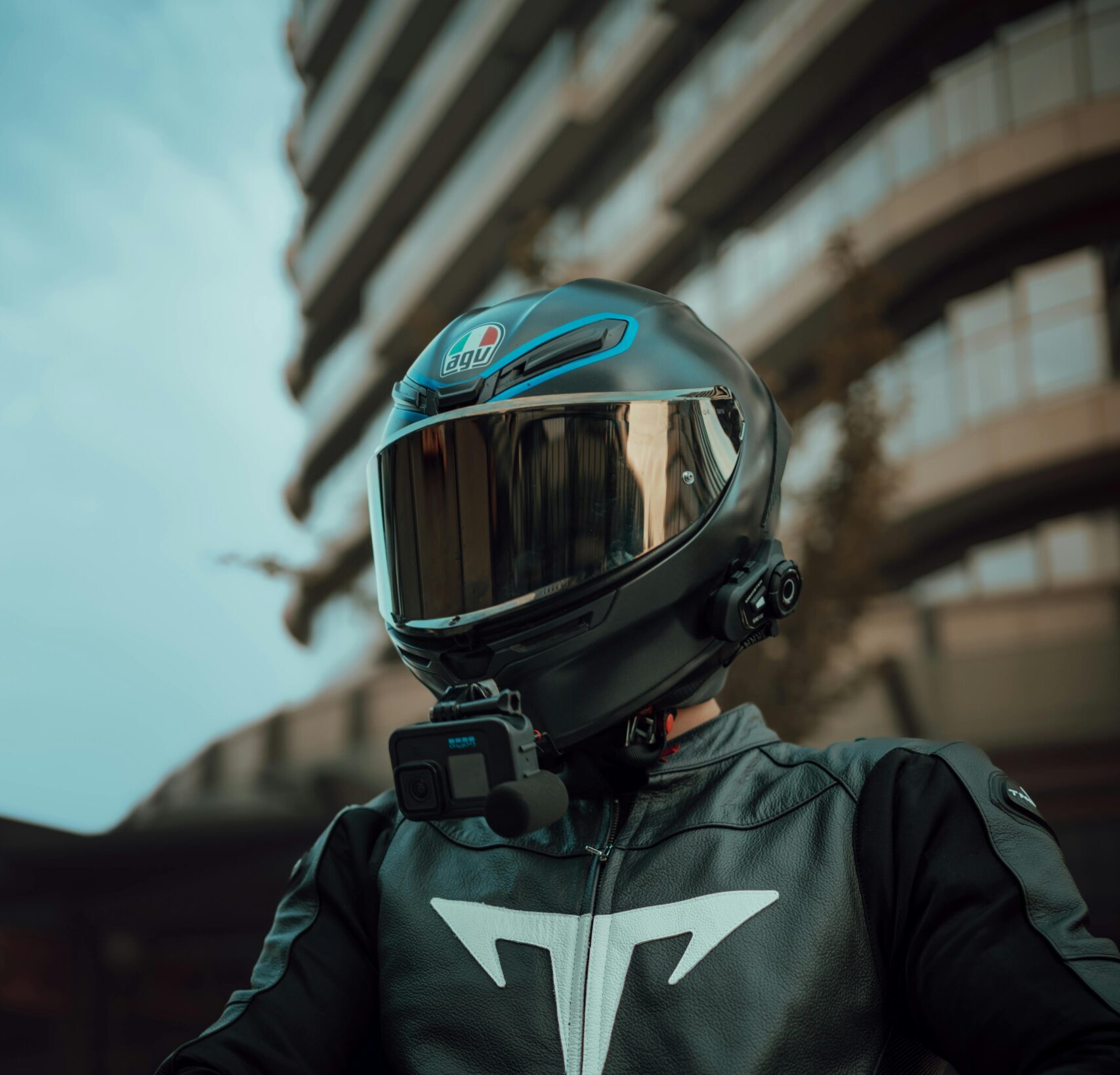
Look around any group ride staging lot in 2026 and you’ll count more cameras than you used to. Helmet-mounted action cams have been around for years. Now the 360 cameras are showing up, the ones on a stalk above the helmet or clamped to the tail, capturing everything around the bike at once instead of just the view ahead.
The popularity makes sense. Riders want the footage. They want the canyon run to show the buddies who couldn’t make it. They want proof when a driver in a cage swears the rider ran the light. They want the record.
We’re not here to tell you whether to mount one. That’s your call, your budget, your bike. What we want to talk about is what a camera actually does at a crash scene, because there’s a quiet assumption riding along with all this gear, and it’s worth saying out loud.
A camera is a witness. It is not a responder.
What the footage is good for
The footage is real evidence, and that matters. When a rider goes down and the driver’s story doesn’t match the skid marks, 360 footage can settle it. A camera that captured the full scene, not just the front view, can be the difference in who gets believed.
There’s a second use that’s closer to our work, and our own people have lived it.
When a Myrtle Beach HOG chapter had a rider go down with no pulse and no breathing, the group did the work. Two of them were Advanced ASM certified. They managed his airway, established traffic control, and made a landing zone so a medevac could get him to a trauma center inside 41 minutes. He survived. Afterward, the chapter pulled the on-bike camera footage, reviewed it, found the gaps in their own response, and built new protocols around who takes command of a scene.
Same thing happened with Todd’s group. Near-fatal wreck, trained riders, a save. Then they went back to the footage and turned one bad day into a permanently safer way of riding together.
That’s the highest and best use of a camera in our world, not the dramatic crash clip or the after-action review. The honest look at what your group did well and what it fumbled, so the next time is sharper.
What the footage can’t do
The camera recorded every second of those 41 minutes. It did not stop the bleeding or protect the spine. It did not clear an airway or hold back the bystander who wanted to roll the rider over. People did that. Trained people.
When a rider goes down, there’s a window between the crash and the moment EMS arrives. 5 to 55 minutes, depending on where you are and what roads you ride. The camera fills that window with a recording, it does not fill it with care. The gap is closed by the riders standing over their friend who know what to do with their hands, and it stays open for everyone who doesn’t.
A 360 camera will give you a perfect record of a rider bleeding out on the shoulder while nobody around him knows how to help. That’s the blunt version. We don’t say it to scare you. We say it because it’s true, and because our audience works with their hands and respects a straight answer.

The honest place to land
Mount the camera or don’t. Either way, the camera is not a plan.
If your group is serious enough about riding to spend a few hundred dollars per bike on capturing it, the same logic points somewhere uncomfortable. The footage of a crash is worth a lot less than a rider on scene who can act in the gap. One records the worst day of someone’s life, and the other changes how it ends.
Accident Scene Management trains riders for exactly that window. CPR and standard first aid don’t cover what happens to a downed rider, the helmet, the spine, the leathers hiding a catastrophic bleed. ASM does. Road Guardians is the largest motorcycle trauma training organization in the world and the only CAPCE-accredited in the US. We’ve trained nearly 50,000 riders.
So buy the camera if you want the footage. Then get the training that makes the footage worth reviewing. The best after-action video in the world is the one where your group did everything right.
Want to get your group trained? Contact us today to get more information

